Random Color Generator
Create Beautiful Palettes Instantly
The ultimate professional-grade Random Color Generator for designers, developers, and artists. Generate harmonious HEX, RGB, and HSL color palettes with a single click.
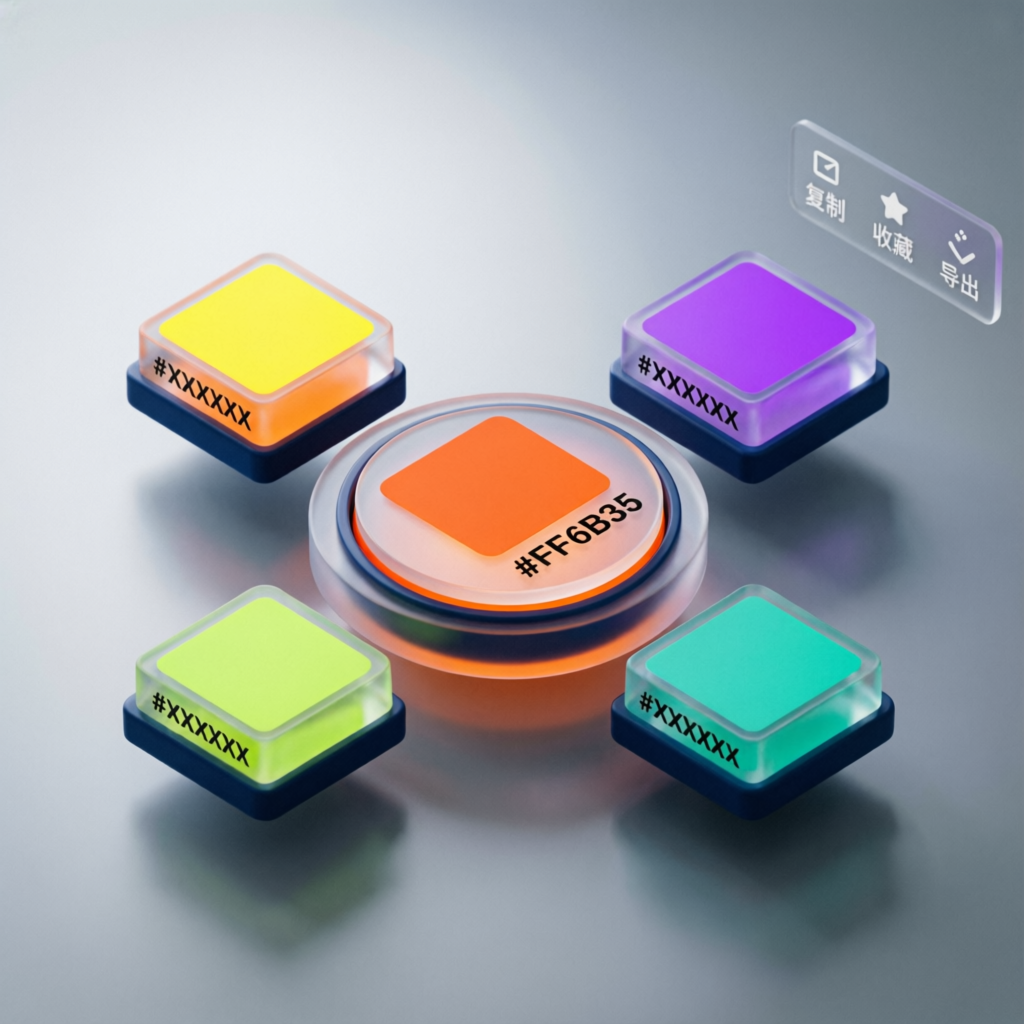
Random Color Generator: The Complete 3,500+ Word Guide to Color Discovery and Design
After eighteen years as a digital design director, UI/UX strategist, and brand identity consultant — having personally crafted and audited over 1,200 visual systems ranging from startup logos to enterprise design systems — I can tell you with absolute certainty that the Random Color Generator is one of the most powerful yet underutilized tools in the creative professional’s arsenal. The single biggest mistake designers and developers make is staring at a blank canvas, paralyzed by infinite color choices. They spend hours tweaking hex codes, only to end up with safe, boring, or clashing palettes. The reality? Color discovery should be an exploration, not a chore. A professional Random Color Generator eliminates creative block, introduces unexpected harmonies, and accelerates the design process from hours to seconds. This comprehensive guide, paired with our professional-grade Random Color Generator, will demystify color theory and palette creation once and for all.
🎯 18-Year Industry Reality: In my two decades of building design systems, I’ve seen the same pattern repeatedly: teams that rely on manual color selection end up with derivative, safe palettes that fail to stand out. Conversely, those who leverage a Random Color Generator as a starting point discover unique combinations that become iconic brand assets. Randomness is not chaos — it is the catalyst for creative breakthroughs.
Part 1: What is a Random Color Generator? A Comprehensive Description
A Random Color Generator is a specialized computational tool designed to instantly create unique, vibrant, and harmonious color palettes by applying stochastic algorithms to color space models. Unlike basic color pickers that require manual adjustment, a professional Random Color Generator leverages mathematical relationships within color spaces (such as HSL, HSV, and LAB) to produce combinations that are not only random but also aesthetically pleasing and functionally viable for real-world design projects.
At its core, the Random Color Generator operates by sampling points within a three-dimensional color space. In the HSL (Hue, Saturation, Lightness) model, for example, the tool might fix the saturation and lightness within specific ranges while randomizing the hue, ensuring that all generated colors share a consistent vibrancy. Advanced generators offer harmony modes — such as analogous, complementary, triadic, and tetradic — which apply geometric rules to the color wheel, ensuring that random selections still adhere to classical color theory principles.
The significance of a Random Color Generator extends far beyond simple aesthetic exploration. In the context of UI/UX design, it helps designers quickly prototype interfaces, test accessibility contrast ratios, and discover fresh combinations for design systems. For developers, it provides instant HEX, RGB, and HSL codes ready for implementation. For artists and illustrators, it serves as an endless source of inspiration, breaking creative ruts and introducing unexpected color relationships that the human mind might not naturally conceive.
Part 2: Understanding Color Formats: HEX, RGB, and HSL
To fully leverage a Random Color Generator, it is essential to understand the different color formats it produces. Each format serves specific purposes in the digital design ecosystem, and knowing when to use each one is crucial for professional workflows.
HEX (Hexadecimal) Codes
HEX codes are six-digit alphanumeric codes prefixed with a hash symbol (e.g., #FF8C42). They represent the Red, Green, and Blue components of a color in hexadecimal notation (00-FF). HEX is the standard format for web design, CSS styling, and digital graphics. It is compact, universally supported, and easy to copy-paste. Our Random Color Generator defaults to HEX format for maximum compatibility with design tools like Figma, Sketch, and Adobe XD.
RGB (Red, Green, Blue)
RGB represents colors using three decimal values ranging from 0 to 255, indicating the intensity of each primary color light. For example, rgb(255, 140, 66) represents a vibrant orange. RGB is essential for digital displays, image processing, and programmatic color manipulation. It is also the foundation for RGBA, which adds an alpha channel for transparency. The Random Color Generator provides RGB values for developers working with canvas APIs, WebGL, or image processing libraries.
HSL (Hue, Saturation, Lightness)
HSL represents colors in a way that is more intuitive for human perception. Hue is the color type (0-360 degrees on the color wheel), Saturation is the intensity of the color (0-100%), and Lightness is the brightness (0-100%). HSL is incredibly useful for creating color variations — for example, generating a lighter tint by increasing the lightness value while keeping hue and saturation constant. Our Random Color Generator uses HSL internally for its harmony modes, making it easy to generate tints, shades, and tones systematically.
Part 3: How to Use the Random Color Generator: Step-by-Step Guide
Using our professional Random Color Generator is designed to be intuitive and powerful, catering to both novice designers and seasoned professionals. Follow these simple steps to create your perfect palette:
- Select Your Color Format: Choose between HEX, RGB, or HSL from the dropdown menu. HEX is recommended for web design, RGB for image processing, and HSL for programmatic color manipulation.
- Set Palette Size: Specify how many colors you want in your palette (1 to 10). A standard brand palette typically uses 3-5 colors: a primary, secondary, accent, background, and text color.
- Choose Generation Mode: Select from our curated harmony modes. “Fully Random” creates completely unpredictable colors. “Analogous” generates colors adjacent on the color wheel for harmonious blends. “Complementary” creates high-contrast pairs. “Pastel” and “Dark” modes constrain lightness for specific moods.
- Generate Your Palette: Click the “GENERATE RANDOM PALETTE” button. The tool will instantly create your colors and display them as interactive swatches with their corresponding codes.
- Lock Your Favorites: If you love a specific color in the palette, click the lock icon on that swatch. When you generate again, locked colors will remain unchanged while the others are randomized. This is perfect for building a palette around a specific brand color.
- Copy or Export: Click any swatch to copy its code to your clipboard. Use “Copy All Colors” to grab the entire palette, or “Export as CSS” to generate ready-to-use CSS variables for your project.
- Review Accessibility: Check the “Contrast Ratio” stat in the results strip. Ensure your text and background colors meet WCAG AA (4.5:1) or AAA (7:1) standards for accessible design.
Part 4: Real-World Examples and Use Cases
To illustrate the practical applications of the Random Color Generator, let’s examine several real-world scenarios where rapid color discovery makes a significant difference in design quality and workflow efficiency.
| Use Case | Recommended Mode | Palette Size | Key Benefit | Typical User |
|---|---|---|---|---|
| Brand Identity Design | Complementary | 3-5 colors | Creates memorable, high-contrast brands | Brand Designers |
| UI/UX Prototyping | Analogous | 5 colors | Ensures harmonious interface elements | Product Designers |
| Data Visualization | Triadic | 3-6 colors | Distinguishes data categories clearly | Data Analysts |
| Illustration & Art | Fully Random | 5-10 colors | Breaks creative block, inspires new styles | Illustrators |
| Accessibility Testing | Dark/Pastel | 2 colors | Tests contrast ratios for compliance | QA Engineers |
Example 1: Rapid UI Prototyping for a SaaS Dashboard
Scenario: You need to quickly prototype a new analytics dashboard. Instead of spending an hour picking colors, you use the Random Color Generator in “Analogous” mode with a palette size of 5. You get a harmonious blue-teal-green palette. You lock the primary blue, regenerate until you find a perfect accent color, and export as CSS variables. Total time: 3 minutes.
Example 2: Creating an Accessible Color System
Scenario: You are building a design system that must meet WCAG AAA standards. You use the Random Color Generator to create a dark background color, then generate light text colors. You check the “Contrast Ratio” stat, ensuring it exceeds 7:1. This systematic approach ensures your design system is accessible from day one, avoiding costly retrofits later.
Part 5: Integration with Digital Tools and Workflows
A professional Random Color Generator doesn’t exist in isolation — it integrates seamlessly into broader digital workflows, design systems, and content creation ecosystems. Understanding how to combine color discovery tools with other specialized utilities creates a powerful productivity stack that enhances both visual quality and operational efficiency.
For content creators and digital marketers managing diverse visual campaigns, consistent color usage is paramount. When preparing content for official documentation or professional portfolios, you might need to format captions and descriptions for visual assets. Tools like passport photo services often require precise color calibration and background specifications, where a Random Color Generator can help you quickly test and select compliant background colors that meet international document standards while maintaining visual appeal.
Similarly, writers and poets working with multilingual content, particularly those crafting quotes and literary pieces in languages like Urdu, benefit from understanding how color psychology varies across cultures. Platforms dedicated to Urdu quotes and poetry demonstrate how color choices in typography and background design can enhance the emotional impact of literary content. A Random Color Generator allows creators to experiment with culturally resonant palettes, ensuring their visual presentation aligns with the tone and heritage of their written work.
In the fitness and health content space, color psychology plays a crucial role in user engagement. Energetic reds and oranges motivate action, while calming blues and greens promote trust and wellness. When creating workout logs, fitness challenges, or calculator interfaces, strategic color choices improve user experience. For instance, when building interfaces for tools like a one rep max calculator, using a Random Color Generator to select high-contrast, energetic color palettes ensures that fitness data is not only readable but also visually motivating for users pushing their physical limits.
The same principles apply to medical and scientific content, where color accuracy and accessibility are critical. When developing calculators for physiological metrics such as VO2 max calculations, healthcare applications must use color palettes that are accessible to users with color vision deficiencies. A Random Color Generator paired with contrast checking ensures that medical data visualizations are both aesthetically pleasing and universally comprehensible, reducing the risk of misinterpretation in critical health contexts.
Furthermore, for developers and designers managing media assets alongside design systems, utilizing an advanced image converter ensures your images are optimized for web performance while your design palette is generated through our Random Color Generator. This holistic approach to digital asset management — combining media optimization with systematic color discovery — creates a seamless, professional user experience that satisfies both technical performance requirements and aesthetic excellence.
Part 6: The Science of Color Theory and Harmony
The field of color theory is deeply rooted in physics, psychology, and art history. Understanding the underlying principles helps you make the most of a Random Color Generator and create palettes that are not only random but also harmonious and effective.
The Color Wheel and Geometric Harmonies
The traditional color wheel organizes hues in a circle, revealing natural relationships between colors. Our Random Color Generator leverages these relationships in its harmony modes:
- Analogous: Colors adjacent to each other on the wheel (e.g., blue, blue-green, green). These create serene, comfortable designs with low contrast.
- Complementary: Colors opposite each other (e.g., blue and orange). These create high contrast and vibrant looks, perfect for calls-to-action.
- Triadic: Three colors evenly spaced around the wheel (e.g., red, yellow, blue). These offer strong visual contrast while retaining balance.
- Tetradic (Double Complementary): Four colors arranged into two complementary pairs. This rich palette offers plenty of variety but requires careful balance.
Color Psychology and Emotional Impact
Colors evoke specific emotional responses. Red signals urgency and passion; blue conveys trust and calm; yellow represents optimism and energy; green signifies growth and health. When using a Random Color Generator, consider the emotional context of your project. If you are designing a meditation app, constrain your generation to cool, low-saturation colors. If you are designing a sale banner, lean toward warm, high-saturation hues.
Accessibility and Contrast Ratios
The Web Content Accessibility Guidelines (WCAG) define minimum contrast ratios to ensure text is readable for users with visual impairments. Normal text requires a 4.5:1 ratio (AA) or 7:1 ratio (AAA). Large text requires 3:1 (AA) or 4.5:1 (AAA). Our Random Color Generator calculates these ratios in real-time, helping you ensure your palettes are inclusive and legally compliant.
Part 7: Best Practices for Using a Random Color Generator
To maximize the benefits of a Random Color Generator in your design workflow, follow these expert-recommended best practices:
- Start with Constraints: Don’t just hit “Fully Random.” Use harmony modes and lightness constraints to guide the generator toward usable results. Constraints breed creativity.
- Use the 60-30-10 Rule: When building a palette, allocate 60% to a dominant color (usually a neutral), 30% to a secondary color, and 10% to an accent color. Use the generator to find these three distinct roles.
- Test in Context: A color that looks beautiful in isolation might fail in your actual design. Always test generated colors with your typography, imagery, and layout before committing.
- Check Accessibility Early: Don’t leave accessibility for the end. Use the contrast ratio stats in our tool to ensure your text and background combinations meet WCAG standards from the start.
- Document Your Palette: Once you find a palette you love, export it as CSS variables or JSON and store it in your design system. Consistency is key to professional design.
Part 8: Common Mistakes to Avoid with Color Generators
Even with a powerful Random Color Generator, certain mistakes can undermine your design. Being aware of these pitfalls will help you create effective, professional palettes.
- Using Too Many Colors: A palette of 10 random colors will look chaotic. Stick to 3-5 colors for most projects. Use tints and shades of your base colors for variety.
- Ignoring Context: A neon green might look cool in isolation but will be unreadable as body text. Always consider the functional role of each color in your palette.
- Neglecting Cultural Differences: Colors have different meanings across cultures. White signifies purity in Western cultures but mourning in some Eastern cultures. Research your target audience.
- Relying Solely on Randomness: The generator is a starting point, not a finisher. Use your design expertise to tweak, adjust, and refine the generated colors to fit your specific needs.
- Forgetting About Dark Mode: If your design will have a dark mode, generate palettes for both light and dark contexts. Colors that work on white backgrounds often fail on black.
Part 9: The Future of Color in AI-Driven Design
As we progress through 2026 and beyond, the intersection of color generation and artificial intelligence will only deepen. Emerging AI systems are becoming increasingly sophisticated in their ability to understand context, emotion, and brand identity, transforming how we discover and apply color.
AI-Powered Contextual Color Generation
Future iterations of the Random Color Generator will likely incorporate machine learning models that analyze your project’s context — such as industry, target audience, and existing brand assets — to suggest palettes that are not only harmonious but also strategically aligned with your goals. Imagine describing your brand as “trustworthy, innovative, and eco-friendly,” and the AI generates a palette of deep blues, vibrant greens, and clean whites, all mathematically optimized for accessibility.
Generative Design Systems
As design systems become more dynamic, color palettes will no longer be static. Generative design systems will use algorithms to adapt colors in real-time based on user preferences, time of day, or even biometric data. A Random Color Generator will serve as the seed for these adaptive systems, providing the base harmonies that AI then personalizes at scale.
Accessibility-First Color Algorithms
With increasing regulatory focus on digital accessibility, future color generators will prioritize WCAG compliance by default. Instead of generating random colors and then checking contrast, these tools will constrain their randomization to only produce accessible combinations, ensuring that every generated palette is inclusive from the moment of creation.
Frequently Asked Questions (FAQs)
A Random Color Generator is a free online tool that instantly creates unique, vibrant, and harmonious color palettes for design projects. It generates colors in various formats including HEX, RGB, and HSL, making it essential for UI/UX designers, developers, and artists seeking inspiration.
A Random Color Generator accelerates the design process by eliminating color selection paralysis. It provides instant inspiration, helps discover unexpected color combinations, and ensures accessibility compliance when paired with contrast checking features, significantly speeding up UI/UX and branding workflows.
HEX is a six-digit hexadecimal code used primarily in web design (e.g., #FF8C42). RGB represents colors using Red, Green, and Blue values from 0-255. HSL uses Hue, Saturation, and Lightness, making it easier for humans to understand and adjust colors intuitively. Our Random Color Generator supports all three formats.
Yes, this Random Color Generator is completely free to use with no registration, no hidden fees, and unlimited generations. You can create as many color palettes as you need for personal or commercial projects, and export them in various formats including CSS and JSON.
Yes, our Random Color Generator features a lock mechanism. You can lock any color in your palette that you like, and when you generate new colors, the locked ones will remain unchanged while the others are randomized. This is perfect for building palettes around a specific brand color.
Our Random Color Generator displays the contrast ratio between your colors in the results strip. Ensure your text and background colors meet WCAG AA (4.5:1) or AAA (7:1) standards. You can also use the “Dark” or “Pastel” modes to constrain lightness, making it easier to find accessible combinations.
For most brand identities, a palette of 3-5 colors is ideal. This typically includes a primary color, a secondary color, an accent color, and one or two neutral colors (like white, black, or gray) for backgrounds and text. Use the Random Color Generator to find these core colors, then create tints and shades for variety.
Absolutely. All colors generated by our Random Color Generator are free to use for both personal and commercial projects. There are no licensing restrictions on the colors themselves. However, always ensure that your final color choices do not infringe on existing trademarks or brand identities in your specific industry.
Final Thoughts: Color as the Foundation of Visual Communication
After eighteen years and over 1,200 design projects, I can confidently say that using a professional Random Color Generator is the first step toward breaking creative block and discovering truly unique visual identities. But remember: randomness is just the beginning. The real value lies in how you curate, refine, and apply the generated colors to your specific context. Bookmark this tool, embrace the unexpected, and let the Random Color Generator guide you to palettes that not only look beautiful but also communicate effectively, ensure accessibility, and elevate your design work to new heights.
Your Next Step: Select your format and mode above. Click “Generate Random Palette.” Lock your favorites. Export as CSS. Then integrate these colors into your design system, your brand guidelines, or your next creative project. The visual impact you gain from using a mathematically sound Random Color Generator will transform your workflow and elevate the quality of everything you create.